Spaniards in the NCAA 2025–26: Immediate Impact, Reliable Rotations, and a Growing Footprint
The 2025–26 season confirms a trend that is no longer incidental: Spain’s presence in the NCAA is not only increasing in numbers, but also in competitive weight. Based on official data, the current landscape features a wide range of profiles—from long-term development projects to already established contributors—spread across virtually every division of U.S. college basketball.
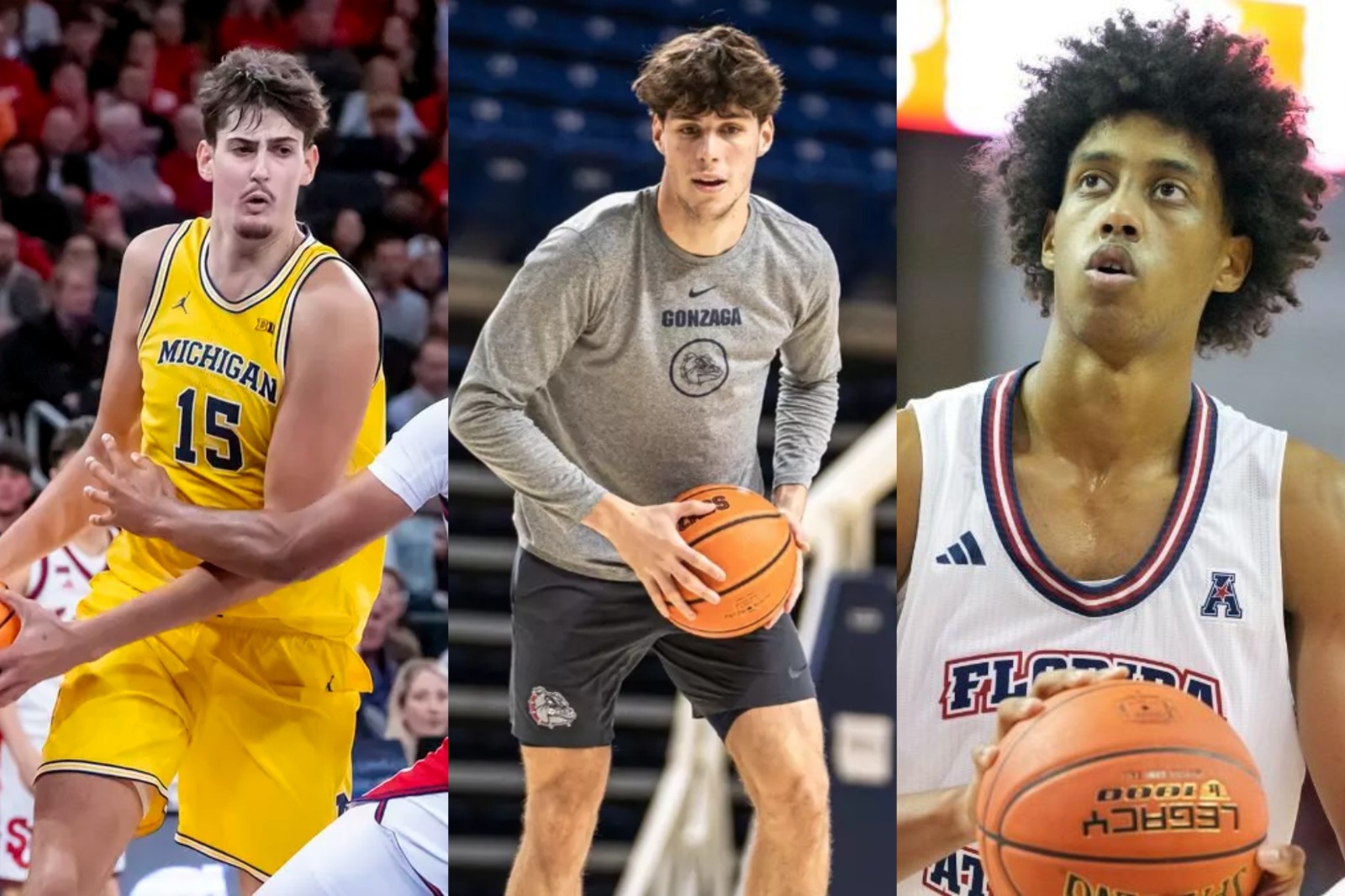
Overall, the pool is broad: more than 80 players holding Spanish passports are currently registered. Naturally, the competitive spotlight centers on those who are already logging meaningful minutes and delivering tangible on-court production.
The Leaders: Production and Prominence
At the top of the performance pyramid are several names putting together clearly impactful seasons, either at high-profile programs or in well-defined roles.
Baba Miller (Cincinnati) stands out as one of the main focal points. Averaging 13.9 points, 10.6 rebounds, and 29 minutes per game, the Spanish big man has become a structural pillar for his team, blending physical presence, offensive consistency, and reliability on the glass. His output places him among the most dependable Spanish frontcourt players in the NCAA.
Another key figure is Aday Mara (Michigan). The 7-foot-3 center is delivering across the board: 10.7 points, 8.4 rebounds, and 2.6 blocks in just over 22 minutes per game. Beyond the raw numbers, his defensive impact and feel for the game explain his growing importance within the rotation.
On the perimeter, Rubén Domínguez (Texas A&M) has emerged as one of the most consistent Spanish scorers this season, posting 13.7 points in 23 minutes per game while handling real offensive volume and responsibility in a demanding competitive environment.
Sustained Performance and Defined Roles
A second tier is made up of players who may not be primary options but contribute with steadiness and continuity.
Álvaro Folgueiras (Iowa) is averaging 9.1 points, 4 rebounds, and over 19 minutes per game—a versatile, reliable profile clearly trending upward.
Mario Saint-Supery (Gonzaga) adds 8 points and 4.5 assists, providing playmaking, tempo control, and decision-making within one of the country’s most structured programs.
Lucas Marí (Vermont) is close to 20 minutes per game, offering balanced production with 6.0 points, 4.0 rebounds, and 3.0 assists.
Julen Iturbe (American University) posts 8.8 points and 5 rebounds, maintaining a steady presence and consistent output.
Interior contributors also stand out, such as Victory Onuetu (Hofstra), who pulls down 8.2 rebounds per game, and Pablo Tamba (LSU), who brings physicality and rebounding (7.4 per game) in a high-level competitive setting.
Specialized Contributions and Defensive Profiles
Beyond scoring, several Spaniards are carving out roles through defensive impact, versatility, or energy off the bench.
Ian Platteeuw (Davidson) combines size and court awareness, averaging 5.4 points, 4.9 rebounds, and over 3 assists.
Valentino Pinedo (UNC Greensboro) provides two-way solidity with 7.2 points and 3.4 rebounds.
Guillermo Díaz (San Francisco) (4.9 points, 3.0 rebounds) and Jorge Díaz (Oregon State) (4.4 points, 3.0 rebounds) add interior minutes with modest but useful production.
Luca Soroa (Northeastern), at 4.9 points and 2.6 assists, and Conrad Martínez (High Point), with 11.5 points and 4.2 assists, stand out for their defensive activity and ability to generate offense.
Young Players in the Adaptation Phase
The list also includes prospects still in development, many of them newcomers or players with limited minutes so far: Guillermo del Pino (Maryland) at 2.2 points, Iker Garmendia (Elon) with 1.5 points and 1.2 rebounds, Jordi Rodríguez (Cincinnati) at 3.1 points and 1.3 rebounds, and Raúl Villar (Charlotte) with 3.2 points and 1.4 rebounds.
All of them are taking their first steps in a highly demanding competitive environment, where simply breaking into the rotation is already a positive indicator of progress and potential.